Southeast Mallorca: From Agricultural Roots to Cultural Renewal
Southeast Mallorca has quietly emerged as one of the island’s most compelling regions – defined not by mass tourism, but by heritage towns, rural landscapes, and a growing cultural confidence. Long appreciated for its vineyards, stone villages, and proximity to the island’s most beautiful calas and long sand beaches, the area is now entering a new chapter shaped by thoughtful architectural rehabilitation, creative projects, and local-first initiatives.
At the center of this momentum sits Felanitx, a historic inland town whose industrial past is becoming the foundation for its cultural future.
Felanitx, Mallorca : A Town Defined by Craft and Community
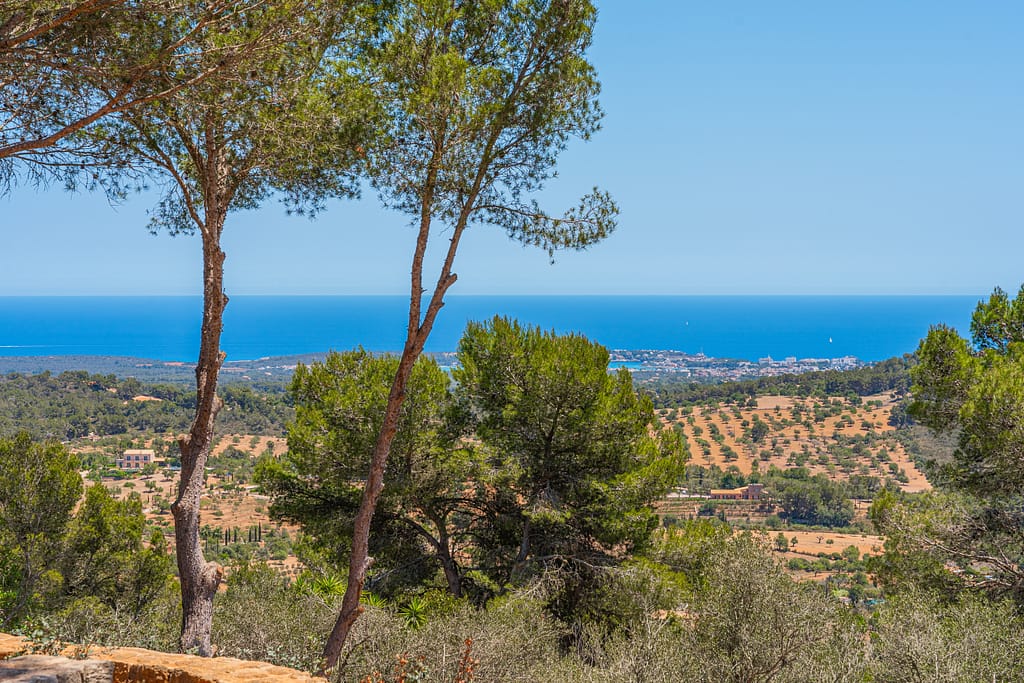
Felanitx has long been tied to wine production, cooperatives, and agricultural exchange. Its urban fabric reflects this history: wide streets designed for carts, robust stone structures, and civic buildings intended for collective use. Surrounding the town, a patchwork of vineyards, olive groves, and farmland continues to shape everyday life, reinforcing Felanitx’s long-standing relationship with agriculture and wine production.
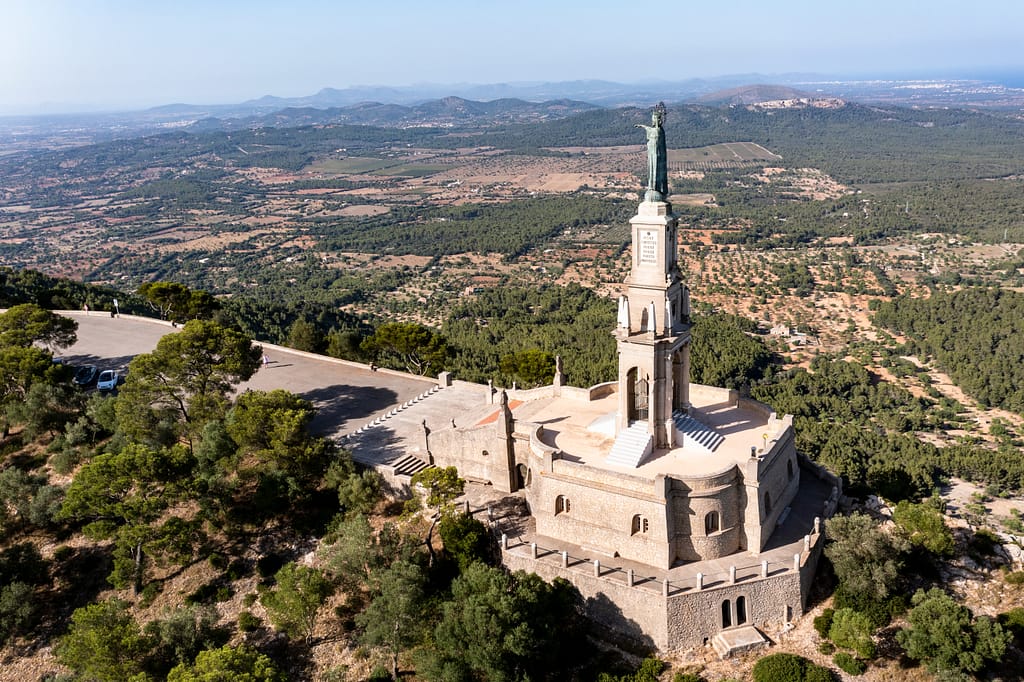
Landmarks such as the hilltop Sant Salvador Sanctuary, a long-standing place of pilgrimage commanding sweeping views across southeast Mallorca, and the dramatic Castell de Santueri, a fortified medieval stronghold set high on a rocky escarpment above the surrounding plains, frame the town within a powerful cultural and geographic context.
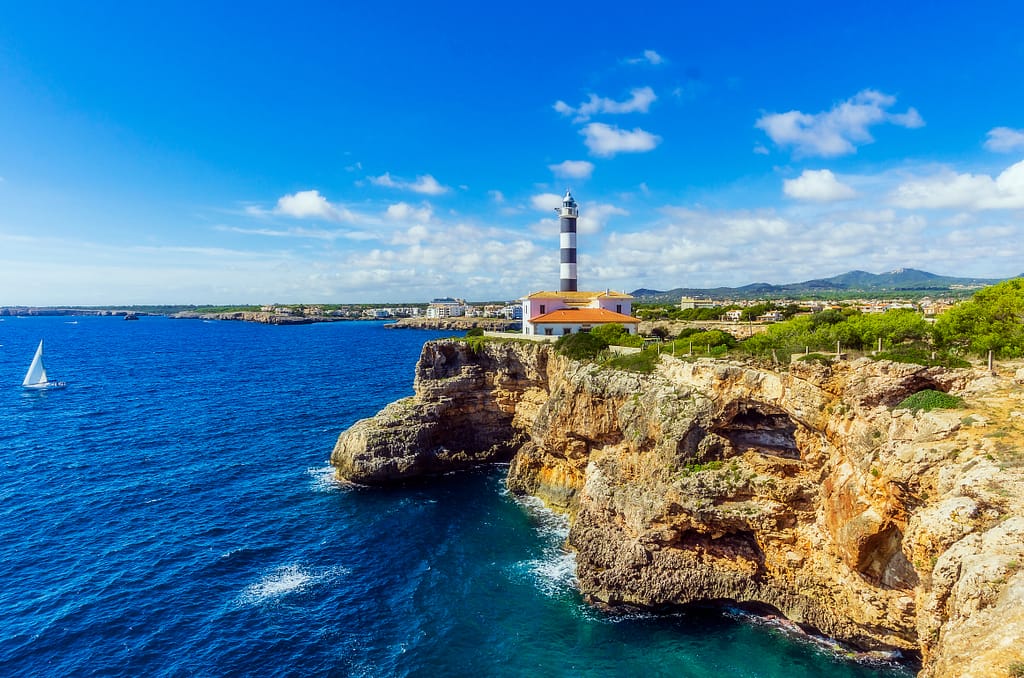
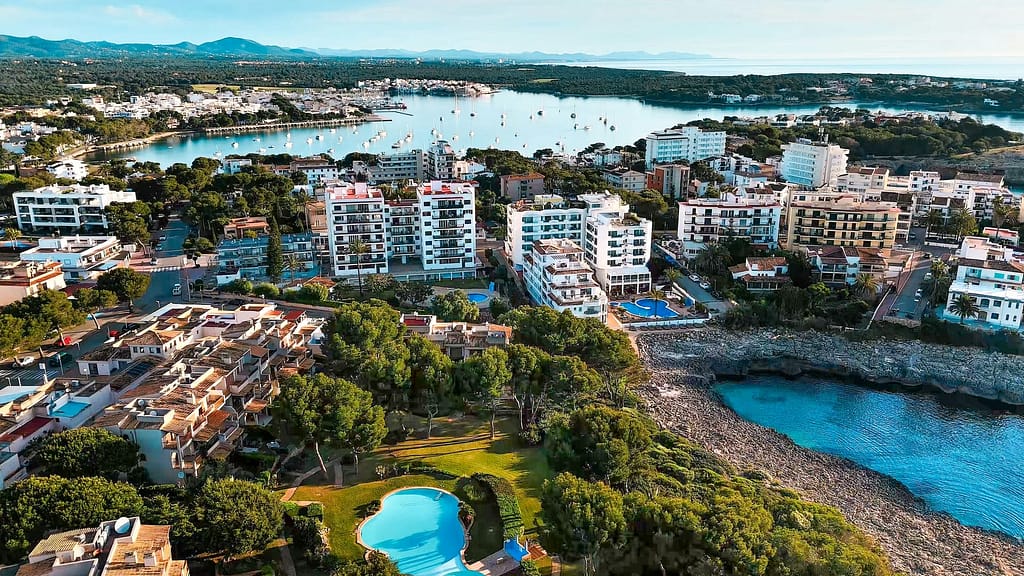
Felanitx’s relationship with the coast is expressed through Porto Colom, its historic port. Developed as a working harbor rather than a resort, Porto Colom retains a strong local character, defined by its natural bay, low-rise waterfront, a longstanding residential fabric, and the striped lighthouse marking the entrance to the harbor.
Today, Felanitx is increasingly recognized as a place where authentic local life and contemporary creativity intersect . The transformation of one of its most important historic structures, Es Sindicat, stands as a clear example of this growing interest.
Es Sindicat: Reimagining Industrial Heritage
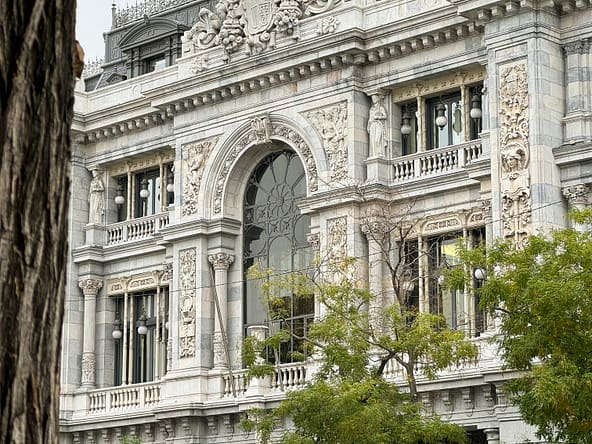
The historic Es Sindicat, built in the early 20th century as a wine cooperative, is a lasting symbol of Felanitx’s agricultural heritage. After years of inactivity, the building is now the focus of an ambitious rehabilitation project that aims to reintegrate it into town life as a vibrant cultural and social center.
This year’s EUROPAN 18 international architecture competition is to rehabilitate the historic Es Sindicat building. The winning proposal, titled Re[Vi]ure Es Sindicat, was submitted by five architects from Mallorca and seeks to revive the building without erasing its industrial character or collective memory. Rather than assigning it a single function, the project introduces a mix of public and creative uses that reflect both past and present.
Former fermentation halls are transformed into exhibition and event spaces, where the building’s original concrete vats remain as markers of its winemaking history. Other areas are dedicated to artistic production, screenings, and temporary exhibitions, while the side aisles host spaces linked to local gastronomy, including a laboratory, shop, and restaurant showcasing Mallorcan food and wine traditions.
The proposal also reactivates the former olive oil mill as a materials research and training space and incorporates cooperative housing designed with shared amenities and carefully considered privacy. Surrounding outdoor areas become fully public, shaped as an extension of the agricultural landscape, with community gardens, native vegetation, rainwater harvesting, and pathways connecting the town to its rural surroundings.
Together, these interventions reposition Es Sindicat as a new civic anchor—one that honors Felanitx’s past while supporting contemporary cultural, social, and environmental life.
Beyond Felanitx: The Cultural Landscape of the Southeast
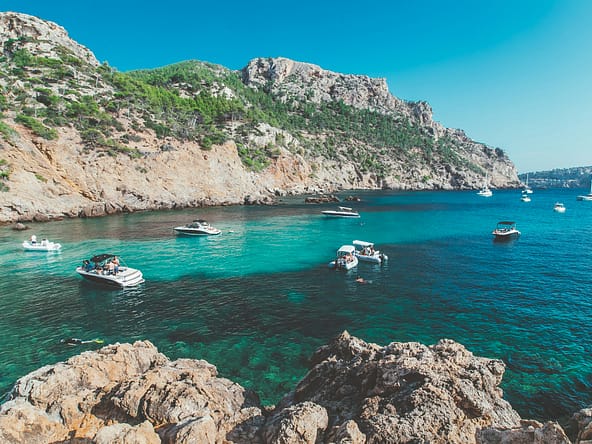
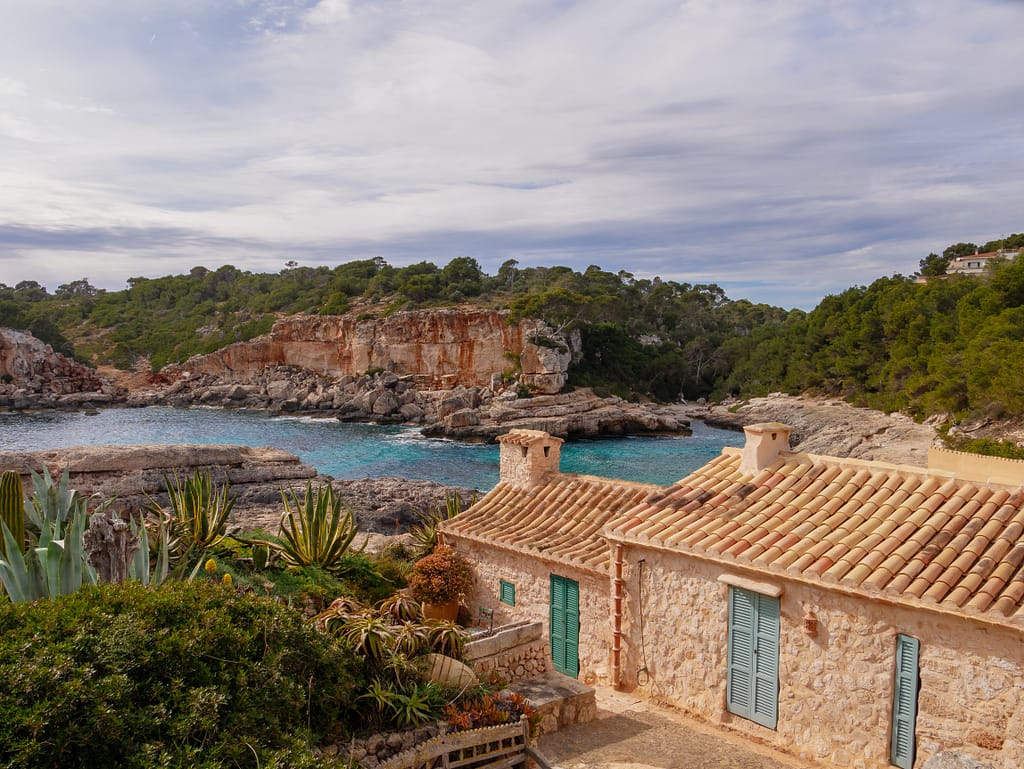
The wider southeast region balances inland tradition with a dramatic coastline. Towns such as Santanyí have become known for their galleries, weekly markets, and stone architecture, while nearby calas form some of the island’s most distinctive coastal landscapes. Cala Llombards is defined by its limestone cliffs and calm, turquoise waters; Cala Santanyí offers a broader sandy inlet framed by pine-covered slopes and easy village access; and Cala s’Almunia remains more rugged and intimate, marked by traditional fishermen’s huts and a quieter, unspoiled character.
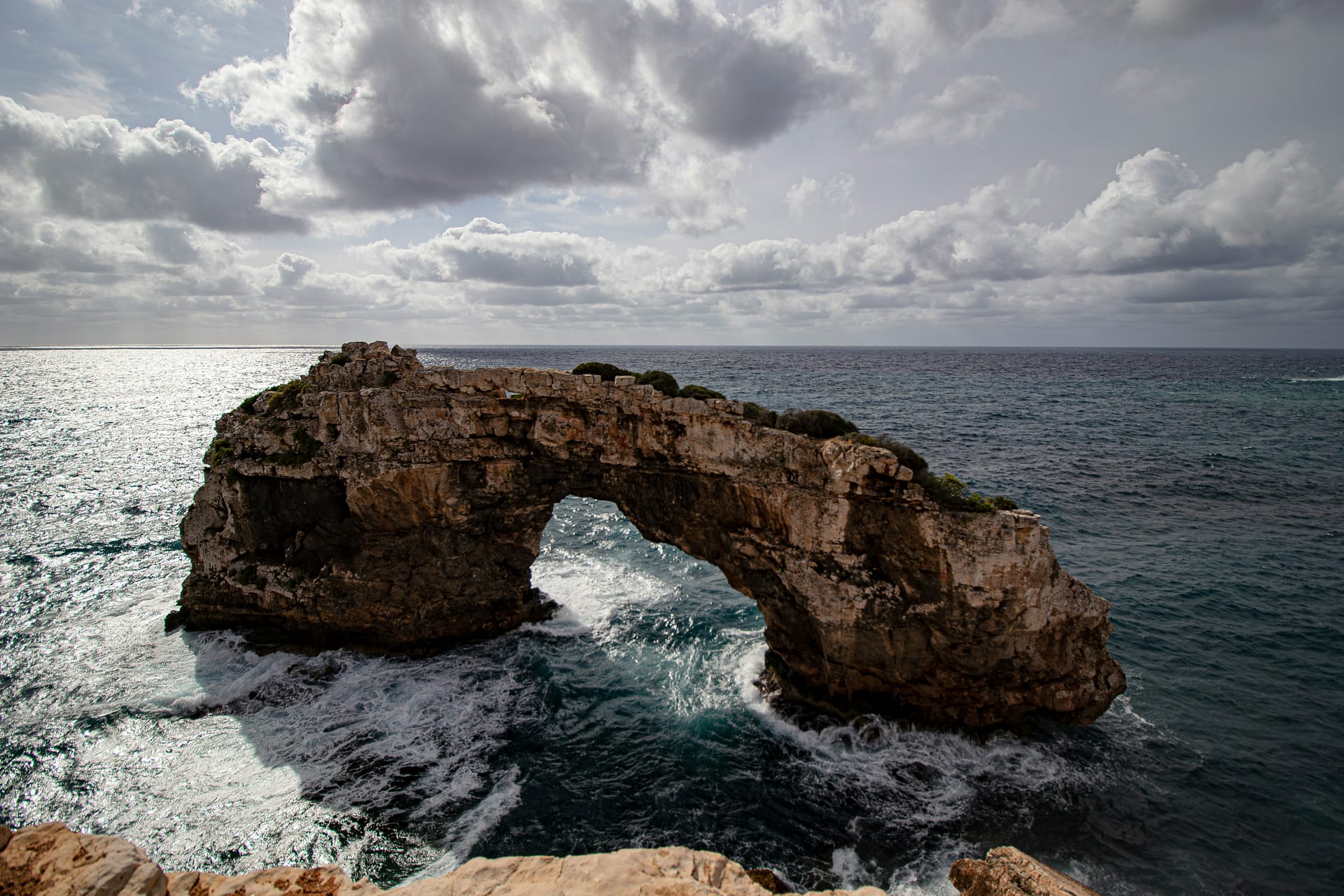
The iconic sea arch Es Pontàs has become a symbol of the area’s raw beauty.Inland, large fincas and vineyards point to a renewed interest in agricultural heritage, sustainability, and slow living, with projects increasingly blending land stewardship and contemporary use.
A Region in Transition and Balance
What distinguishes Southeast Mallorca today is not rapid change, but intentional evolution. Projects like Es Sindicat demonstrate how architecture can serve as a bridge between past and future, while the region as a whole attracts those seeking depth over spectacle — creatives, families, and long-term residents rather than transient crowds.
This balance between preservation and progress is precisely what makes the southeast one of the most interesting areas on the island right now.
Property Spotlight: Southeast Mallorca

Why Southeast Mallorca Is Gaining Momentum
- Authentic Mediterranean culture without the crowds, where village life, markets, and traditions remain rooted in everyday local rhythm rather than seasonal tourism, supported by an active agricultural base of vineyards, olive groves, and small-scale local producers.
- Emerging creative and cultural infrastructure, including projects such as Es Sindicat, which elevate the region beyond leisure into year-round cultural relevance.
- Immediate proximity to unspoiled beaches, calas, and protected natural landscapes, offering a rare balance between countryside living—often set among farmland and vineyards—and direct coastal access.
- Increasing appeal to creative professionals, international residents, and lifestyle buyers seeking substance, space, and community rather than resort-style environments.
- More competitive property values compared to heavily touristic or long-established expat enclaves, positioning the southeast as a compelling alternative to saturated markets while still offering long-term growth potential.